Voice AI for Restaurants: Never Miss a Reservation, Takeout, or Delivery Call
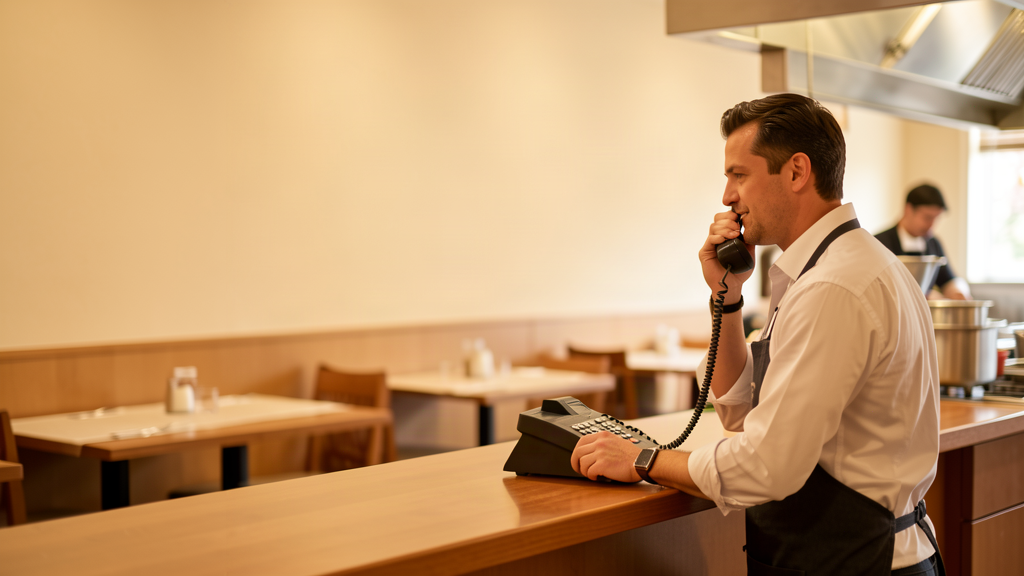
You are mid-service, the kitchen is running at full speed, and the phone rings a third time. You cannot answer it — you are plating. By the time service slows, three missed calls sit in voicemail. A party of six who wanted tomorrow's dinner reservation just booked across the street instead.
For restaurants and food businesses, every call is a potential booking, a takeout order, or a catering lead. When those calls go to voicemail, they rarely come back. A call-centre team is the obvious fix — but it does not fit the budget of an independent restaurant, coffee shop, or bakery. That is why more food businesses are turning to a simple answer: a small-business voice assistant like Aivoxio's that picks up every call, handles reservations, answers questions about hours and allergens, and passes the details on to your team — without you hiring a single new person.
This article explains what a 24/7 voice assistant can do for a restaurant, how much it typically costs, and how to put one in place without adding a single person to payroll. It works in English and French, so a French-speaking guest booking from Quebec never hits a language barrier.
Why restaurants bleed revenue on the phone
The math is straightforward. A busy weekend restaurant can miss dozens of calls a day. Each reservation call that goes to voicemail is a table that was likely sold somewhere else. Takeout and delivery are the same story: a caller who cannot reach a real person, fast, will simply order from the app that answers instantly.
Independent food businesses feel this hardest. A national chain has call-centre software, reserved staff, and a booking system that never sleeps. A family-run pizzeria relies on whoever happens to be near the counter. When that person is busy — and they usually are — revenue walks away in a single unanswered ring.
What customers actually do when you do not answer
When a caller reaches voicemail at a restaurant, they do not call back in five minutes. Most move on immediately to the next option: a competitor, an app, or a delivery platform. The phone call is the highest-intent customer you will ever get — someone ready to spend money right now. Losing that call is not an inconvenience; it is confirmed lost revenue.
The answer is not to work more hours or answer the phone during dinner rush. It is to make sure the phone always gets answered — by an always-on team member that never needs a break.
The voice assistant: your always-on front of house
A voice assistant for restaurants is a phone-answering service that greets callers instantly, day or night. It understands natural speech, captures what the caller wants, and either handles it or routes it to your team. It is designed to answer without sounding robotic, and it can work in multiple languages — so a reservation request in French is handled just as smoothly as one in English.
Think of it as an extra host who is always at the front desk: it takes reservations, notes takeout and delivery orders, shares opening hours and address details, and keeps a clear record of every conversation so your team never loses a lead.
A one-number rule that keeps things simple
Many food businesses worry that adding a voice assistant means adding complexity. It does not have to. With a one-number approach, you keep your existing business number — the one already printed on the door, the menus, and the delivery listings — and the assistant answers it. Your customers call the same number they always have. There is nothing new for them to learn, and nothing for you to change.
The reservations a host cannot catch
During peak hours, even a great host misses calls. The voice assistant fills that gap: it can capture reservation details — party size, date, time, name, phone — and bring them together in an easy summary. If a caller needs to change a booking or ask whether a table is free, the assistant answers the straightforward questions and routes the more involved ones to a person. The goal is never to replace your team; it is to make sure no booking is lost while they do the work only a human can do.
If this sounds like exactly the gap in your front of house, a free demo takes fifteen minutes — hear Aivoxio answer your own number the way a busy Saturday should sound.
What a voice assistant should and should not promise
Be clear about boundaries. A great voice assistant can answer calls, take reservations and orders, answer common questions, and send you clear summaries or texts. It should not be expected to perform tasks it cannot physically do — it routes and captures; your kitchen and your staff do the rest. For urgent matters, it escalates to you or your on-call team, rather than trying to solve everything itself.
Pricing is predictable and flat. Most restaurants find a monthly plan fits comfortably alongside other operating costs — plans start at $297 a month, which captures reservations, orders, and messages into a clear summary; the $497 option adds booking directly into your calendar and messaging, so callers can book a table or get a confirmation without waiting on hold. There is no per-minute meter watching your budget.
How to set it up without disrupting service
Getting started is deliberately simple, and it does not require changing your number or unplugging anything:
- Keep your number. The assistant answers your existing line — no porting, no new number to advertise.
- Pick your calls. Decide which hours the assistant covers — weekday evenings, weekends, after-hours — and what it should handle.
- Give it the essentials. Share your hours, address, menu basics, and common questions so it gives accurate answers.
- Test it live. Hear it handle a real call before you switch it on for customers.
- Review and refine. Check the call summaries, see what callers ask, and adjust over time.
Many food businesses can go live within a day. The assistant handles the first calls, and your team gets clear, searchable records instead of fuzzy memories.
The big-guys advantage, now within reach
Restaurants have relied on the phone as their front door for decades. What has changed is that the giant chains no longer have a monopoly on answering every call. The same always-on coverage they pay call-centres for is now affordable for an independent restaurant — and it quietly levels the playing field.
You do not need a bigger team or a more expensive phone system. You need a phone that never leaves a caller unheard. That is a small change with an outsized effect on bookings, orders, and repeat customers.
A working day without a missed call
Picture a typical Saturday: the phone rings at 9 a.m. with a brunch reservation for six — the assistant captures it while you prep. At noon, a family asks whether there is a high chair and if you are open late — it answers instantly. At 9 p.m., a catering request comes in from a local office; the assistant records the details and sends you a summary. Every one of those leads reached a real, live voice. None of them went to voicemail, and none of them had to wait on hold.
That is the difference a voice assistant makes — not by replacing your people, but by making sure every customer who calls is heard, every time, including the ones who call when your doors are closed.
Ready to hear it on your line?
If missed calls have cost your restaurant a single booking, one evening, or one busy weekend, a voice assistant is worth fifteen minutes of your time. Book a free demo and hear how your own number could answer every call — reservations, takeout, and delivery — from the moment you switch it on.
Book a Free Demo → aivoxio.com
Pricing: plans start at $297/month, with a $497/month option. English and French supported. No long-term phone-system changes required. © 2026 Aivoxio. All rights reserved.