After-Hours: How 24/7 Coverage Captures Jobs Your Competitors Miss
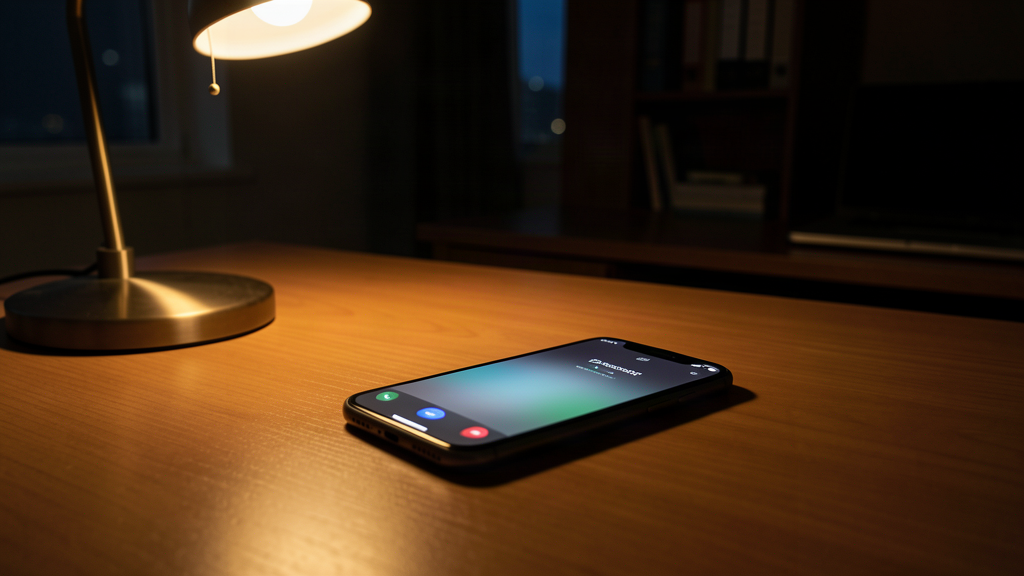
Your business hours say 9 to 5. But your customers don't read your business hours. They call at 6 PM when they get home from work. They call on Saturday when the weekend project finally breaks. They call at 2 AM when a pipe bursts or a tree comes down in a storm.
When the phone rings after hours and nobody answers, that job doesn't wait until morning. It goes to the next business on the list — the one that picked up.
This article breaks down why after-hours calls are often your highest-value leads, and how 24/7 coverage turns them from lost revenue into booked jobs.
The After-Hours Call Is a Different Animal
There's a reason after-hours calls deserve their own conversation. They're not the same as the daytime calls you're used to.
During the day, a caller might be shopping around. They're comparing three or four businesses, checking prices, and not in a hurry. An after-hours call is almost always different. The person on the other end has a problem right now. A burst pipe is flooding their basement. A tree is leaning on their roof. Their furnace died on the coldest night of the year. They're not comparing options — they're looking for someone who can help, tonight.
That urgency is exactly why after-hours leads convert at a higher rate. When someone calls at 7 PM with a real problem, they're ready to book. They're not kicking tires. They want a solution, and they want it now.
What Happens When You Don't Answer
Let's be honest about what happens when the phone rings after hours and nobody picks up.
The caller hears your voicemail. Maybe they leave a message. Maybe they don't — and a large share of callers hang up without leaving one. Either way, the clock is ticking, and the caller is already moving on.
Here's the part that hurts. That caller isn't going to sit and wait for you to call back tomorrow. They're going to call the next business on their list. If that business answers — or has a 24/7 line — they get the job. You don't even get a chance to bid.
The missed after-hours call isn't just a missed call. It's a job handed directly to your competitor, with a bow on it.
The Numbers Behind After-Hours Misses
The math is straightforward, and it's worth doing for your own business.
Say you miss just three after-hours calls a week. Each one is worth a $400 average job. That's $1,200 a week in revenue you never even saw. Over a year, that's more than $60,000 — from calls that happened while you were off the clock.
Now, not every after-hours call is a $400 job. Some are smaller. But some are much bigger — emergency calls, storm damage, urgent repairs — and those are often the highest-ticket jobs of all. When you average it out, the after-hours revenue you're leaving on the table is almost never small.
The frustrating part is that this money is completely avoidable. The calls are coming in. The demand is there. The only thing missing is someone to answer.
Why Small Businesses Miss After-Hours Calls
It's not that you don't care about the calls. It's that you physically can't be there.
You're a small business. You don't have a call center. You don't have a night shift. You have you — and you can't be on the phone at 2 AM and on a roof at 7 AM. So the after-hours calls go to voicemail, and the jobs go to whoever answers.
Hiring a receptionist doesn't fully solve it either. A receptionist works eight hours a day, five days a week. They take breaks, sick days, and vacations. They're not covering your 6 PM calls, your weekends, or your 2 AM emergencies. Even with a full-time receptionist, you still miss the after-hours leads — which, as we've seen, are often your most valuable ones.
What 24/7 Coverage Actually Looks Like
So what does it mean to actually cover after-hours? It means every call, at every hour, gets answered by someone who sounds like they work for you.
A 24/7 voice agent answers the phone the moment it rings. It listens to the customer's problem, books an appointment, captures their contact details, and sends you a clean summary. For a genuine emergency, it routes the call to you right away — so a burst pipe at 2 AM reaches your phone, not your voicemail.
The customer talks to someone who knows your business. It's trained on your services, your pricing, and your tone. It's not a generic answering machine reading a script. It's your always-on team member, working the hours you can't.
The Big-Guys Advantage, Now Within Reach
Here's the thing about 24/7 coverage: the big companies have always had it. A national chain has a call center, a night team, and someone answering at every hour. That's a huge advantage — when a customer calls a big company at 7 PM, someone picks up.
Small businesses never had that option. You couldn't afford a call center, and you couldn't staff a night shift. So you lost the after-hours jobs to the businesses that could.
That's changed. A 24/7 voice agent gives a small business the same always-on coverage the big guys have — for a flat monthly price that's a fraction of a single missed job. It's the big-guys advantage small businesses now get.
The Bilingual Advantage After Hours
There's another layer to this for Canadian businesses. After-hours callers aren't all English speakers. In many parts of the country, a significant share of your customers are francophone — and they want to be served in French.
A bilingual voice agent handles this naturally. It answers in English or French, whichever the caller prefers, and switches between them without missing a beat. That means you're not just covering after-hours — you're covering after-hours for every customer, in the language they're most comfortable with.
A bilingual receptionist is hard to find and expensive to hire. A bilingual voice agent is part of the flat monthly service. For a Canadian business, that's a real differentiator.
What Your Customers Experience
Let's walk through the two scenarios from the customer's point of view, because that's what really decides who gets the job.
Without 24/7 coverage:
- The phone rings. And rings. And rings.
- The customer checks the time. It's 6:30 PM on a Tuesday.
- They hang up and call the next business on their list.
- That business answers. They get the job.
With 24/7 coverage:
- The phone rings once. Someone answers.
- The customer explains their problem — a burst pipe, a downed tree, a broken furnace.
- The agent books an appointment, captures their details, and confirms the time.
- The customer hangs up feeling taken care of. The job is yours.
The difference isn't subtle. It's the difference between winning and losing the customer before the conversation even really starts.
The Cost of Doing Nothing
It's tempting to put this off. "I'm not missing that many calls." "I'll deal with it when I'm bigger." But the cost of doing nothing is real, and it compounds.
Every after-hours call you miss is a job you hand to a competitor. And in most markets, the businesses that adopted 24/7 coverage early are now capturing the after-hours and emergency calls that used to go to voicemail. The longer you wait, the more of those jobs go to them.
The good news is that the fix is simple and fast. You keep your existing phone number. The voice agent is configured to answer it, trained on your business, and live within days. No new hardware, no new software to learn, no contracts that lock you in.
Common Questions, Answered
"Will customers be put off by an AI voice agent?"
No. Modern voice agents sound natural and human. Most callers can't tell the difference, and the ones who can appreciate that they got an answer instead of voicemail. The agent is trained on your business, your services, and your tone.
"What if there's a real emergency?"
The agent is trained to recognize emergencies and route them to you immediately. A burst pipe at 2 AM gets forwarded to your phone right away — while the agent handles the non-urgent calls.
"What about my regular customers who like hearing a human?"
The agent can be set up to transfer to you or your team when you're available. It's not replacing your human touch — it's covering the hours and the overflow you can't.
"How much does this cost?"
Aivoxio's voice agents are a flat monthly service, typically $397 to $497 per month. No hourly billing, no per-minute surprises. One predictable number.
The Bottom Line
Here's the decision in one sentence: Every after-hours call you miss is a job you hand to a competitor — and 24/7 coverage turns those calls into booked jobs.
The calls are already coming in. The demand is already there. The only question is whether someone answers. A 24/7 voice agent makes sure someone always does — in English or French, at every hour, for a flat monthly price.
Imagine never checking voicemail with your heart sinking. Imagine knowing that every call, at every hour, is being answered by someone who sounds like they work for you. That's what full coverage feels like.
Your Move
If you've been losing after-hours jobs to competitors who answer, the fix is within reach. A 24/7 voice agent costs a fraction of what a single missed job is worth — and it works the hours you can't.
Stop Missing Calls. Start Growing.
See how a 24/7 voice agent can capture your next after-hours job, in English or French, for a flat monthly price.
Book a Free Demo